

"Let's Talk Therapy" with Marc Typo
one of my favorite dads (and people) shares his heart and soul with us


Welcome to this tiny corner of the internet where an off-duty psychotherapist keeps the conversation going on how to make sense of this life thing we’re all doing.
This week’s newsletter is an interview series, “Let’s Talk Therapy.” Through these dozen or so questions, you will get a deeper sense of how therapy can look and feel within oneself. Like most things, transparency about an experience can do wonders in deepening our compassion. My sincerest wish is this series will help in normalizing the complex feelings that can arise through doing therapeutic work and empower us to utilize it more wholeheartedly. Also, if I’m honest, I hope to learn even more about the experience of being a client so that I can continue to be an increasingly attuned psychotherapist.
One thing before we jump in, I show up very much as myself here. Myself first, and all my other labels are secondary. If a therapist speaking candidly feels like too much to your system, that is absolutely is OK and this may not be the best particular newsletter for you.1

This week Marc Typo of Raising Myles answered the Let’s Talk Therapy questionnaire.
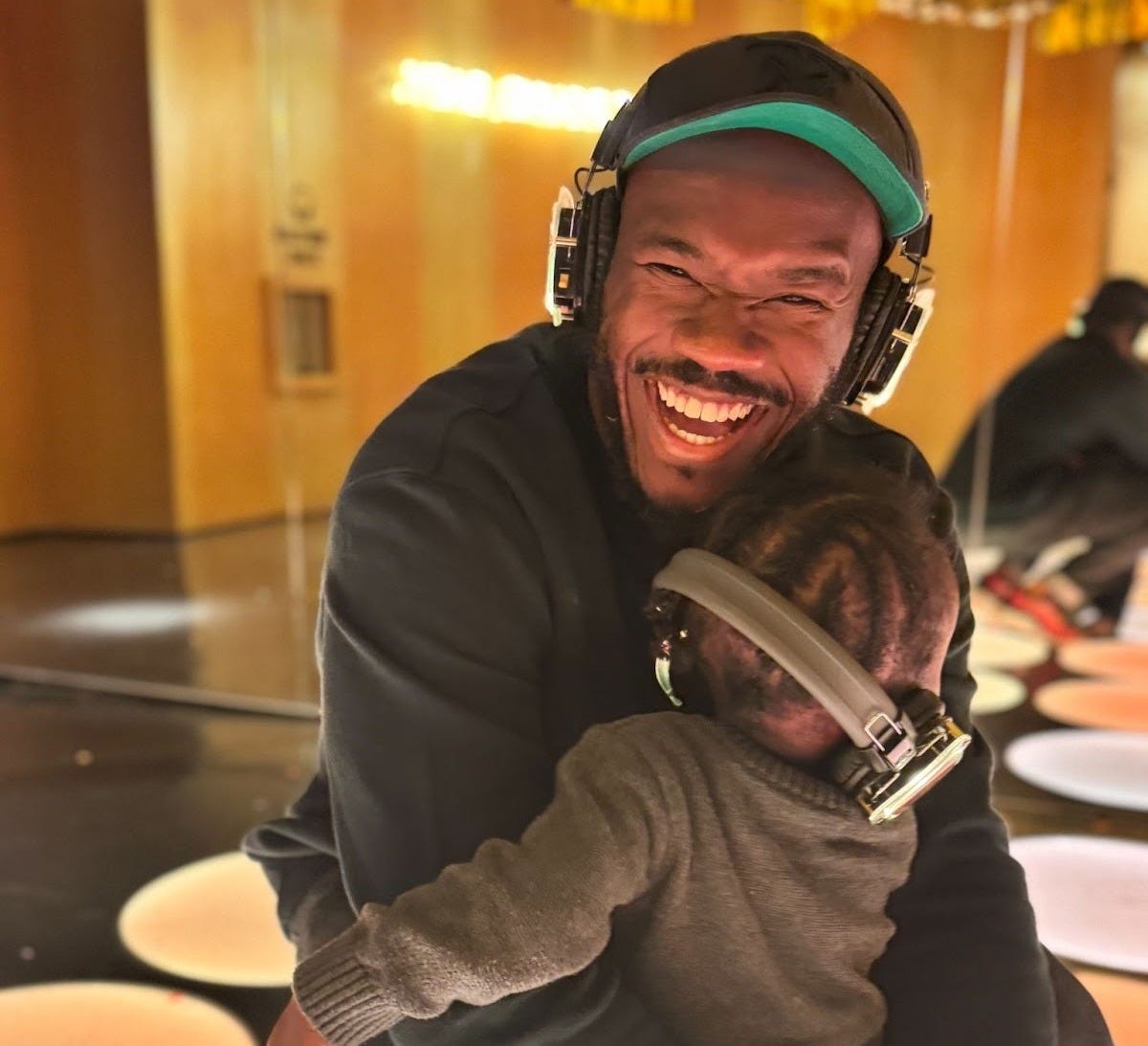
Marc and I came to know each other through Substack over two years ago now. It’s striking to me how vividly I remember these first interactions. I admired what I’d read of his work, not just the quality of his writing but the heart residing within it, I must have known it was something to remember. This was someone I didn’t want to lose touch with.
I suspect it won’t take you long to understand why…

First things first: How are you feeling–in this very moment–about volunteering to talk about therapy and mental health?
I feel it’s something that’s more for me than anyone else. After my son was born, I stopped going to therapy. Scheduling was hard because what is a schedule when you have a little one? It felt like even though I was trying to take care of myself, I was finding it difficult to be fully present because I was experiencing so much guilt. My sessions were at night, and for that hour Myles, my son, was just not having it. I think I struggled always trying to take up space for me; being a father just made that more difficult. I’m writing this as a way to get back into therapy. I actually just texted my therapist this morning after a rough time with my partner and said, yeah, I think it’s time we start talking again. I enjoy talking about therapy because I only started going because someone else was so open to talk about their experience. I think the more we share our stories, the more we give other people permission to do the same. So I try to be open, honest, and vulnerable, knowing that I am not all that special, and talking about what’s going on inside not only heals me but hopefully heals someone else on the outside.
Tell us a bit about you.
I was born and raised in Brooklyn, NY. I’m currently living in Birmingham, AL after meeting my wife and best friend, Maya, on a subway platform almost 10 years ago.2 We have a beautiful two-year-old boy named Myles, who is the center of our world. I was a high school English teacher before moving here to Birmingham, AL, and now I work for an edtech company where I get to work with teachers, principals, and district leaders on how to use my company’s program to support student learning. When I’m not working, being a husband, and a dad, I write letters to Myles documenting what it’s like to be his dad. I share these letters publicly to process what it means to be a father in a world where fatherhood is sometimes written off as a joke. I write about the love I didn’t experience to my son, and I write for the young dads who are going through the paradigm shift of bringing a child into this world that didn’t come with a handbook. People can find these letters on my Substack, Raising Myles. My pronouns are he/him. I’m Black, a first-generation American, and the child of Haitian immigrants.


What has your experience in therapy been like? Has it been what you expected?
When I first started going to therapy, for the first couple of months I was sizing up my therapist. I had to figure out who this person was and whether he could really understand who I was and what I was holding. I had to get out of my own head and my thoughts, where I was telling myself things like I was so lonely that I needed to pay someone to talk to. Eventually, when I let my guard down, it was what I really needed. Therapy became the place I could really be me—the me without consequence or fear. I think it’s one of the few places in my life where I felt safe, one of the few places in my life where, for an hour, everything was about me. And when I tried to make it about someone else, there someone was, reminding me to center what mattered most in that moment: me.
Tell us about the types of therapists or modalities you’ve tried. Bonus vulnerability points for transparency on how much it cost.
I’ve only tried one kind of therapy—cognitive behavioral therapy (CBT).3 It’s been a while, but I remember I was my therapist’s first private client, and he had a sliding scale. After insurance and all, I ended up paying about $50 a session. When I moved to the South and made less money but had more responsibility because my child was in the picture, he and I worked something out that still fits in my budget. I know all therapy is not created equal, so I am so appreciative that he still sees me even though his rate is a lot more than it used to be. For that, I am grateful.
(Kait' jumping in here) KE: Sliding scale is an arrangement where the fee is determined by the client’s ability to pay—sometimes this is calculated through a rubric based on income, other times it’s determined between client and provider on an ongoing basis, or The Sliding Scale: A Tool of Economic Justice (aka The Green Bottle Method) from Alexis J. Cunningfolk.
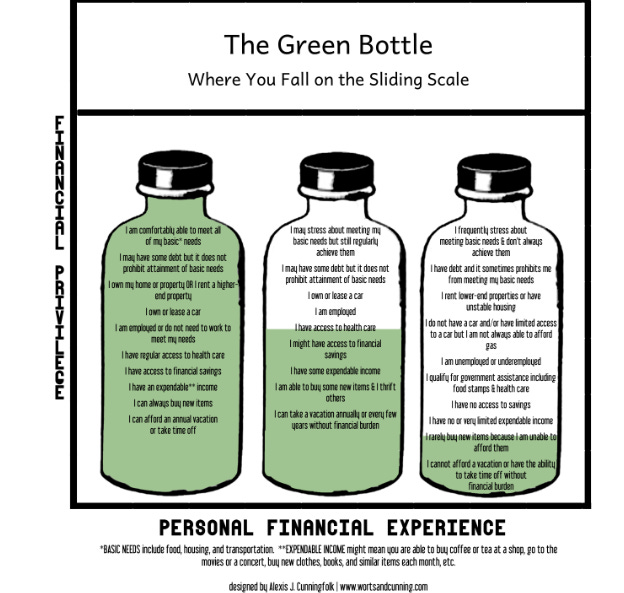
Not every therapist has a sliding scale arrangement, however some do—whether it’s a few spots or their entire caseload. If they do, it’s typically listed on their website or profile if you’re looking on Psychology Today. If finances have been a limiting factor, know you can always ask about one.
What do you notice you feel before sessions?
I used to feel nervous before sessions to the point it caused my anxiety. I always felt like I had to come with something, and when I didn’t, it felt like I was the kid who forgot his homework. So I tried to make a list of things to talk about; I wanted to feel and seem prepared. Eventually though, I realized I was treating my sessions, well, the prep, like everything else: I had to be someone in this space, and bringing something was part of that. Eventually, I learned showing up was enough, and those times when I showed up with nothing, just my heart open, those were the moments we were able to dig in.
KE: So relatable, right? Both the feeling like we need to have something prepared and what happens when we let go and just show up as we are.
What is the average session like?
Usually, when I get there, I realize that when I sit down during a session, it’s the first time all day that I actually get to sit down and pay attention to myself. In the beginning, I always felt disoriented, like when you get up too quickly and your feet are trying to catch themselves under you, but I was sitting. I often said in the beginning, this is the first time I’ve really had time to sit down and just think. Sometimes I came with my list, and sometimes I came with nothing. Sessions always revolved around not only what I was thinking, but how my body felt. I feel like I spent most of my time in therapy trying to understand this question about how my body was feeling. We’d joke sometimes, like, “Brother, can you bring in a chart?” Those moments were often the hardest for me, being asked what I was feeling in my body. I don’t know if there was just a dissociation, or no one really truly asked me how I was feeling and what a situation made me feel like in my body.
Before COVID, sessions took place in a cozy office downtown, Brooklyn. During COVID, we transitioned to online, and when I moved to Birmingham, we reconnected again. The meetings were hard online initially because it was difficult to really talk about my feelings through the screen, hearing my son cry through the walls, or my wife trying to do it all without me during the time I felt like she really needed me.
The time in a session never feels like enough, but just enough. My therapist had this way of breathing that subtly let me know it was time. I hated it in the beginning because of the jarring shift, but after some time, I became more cognizant of the time and closed the session myself.
KE: Marc noticing how the endings felt for him is just a sign to me how tuned in he can feel with himself. I’m about to get super meta, but I feel that this sort of noticing is important.
Therapy in many ways is, or can be, a microcosm. It’s mimicking what we experience outside the room. And, as we all know, endings, separations are baked into the fabric our lives—in big ways (e.g., death, break-up’s) and small (e.g., kissing your spouse goodbye as you leave for the day, when you kiss your children goodnight before bed, saying your goodbyes to your coworkers when you logout in the evening.).
Does it elicit an eye roll from clients when I name that these feelings could be an opportunity to understand what comes up for us around other endings? Absolutely, but it’s true (IMO, anyway).
How do you tend to feel after a session?
I feel held and heard.
How has therapy been different from other support you receive?
Sometimes it’s hard to seek support because while deep inside I know I am not a burden to others, when I share what I am going through with people, I can’t help but feel like I’m adding to their plate or taking up too much space. Sometimes the people who love us aren’t equipped to support us, and I had to learn that the hard way. But I think when I go to therapy, I don’t have to worry about how anyone else feels. I really get to focus on me.
KE: This answer got me choked up.
There has been a lot of talk lately about how we just need more relationships/community and we will all be fine. I wish it were that simple, I really do. We need that, no doubt, AND sometimes we need therapy, too. There are people who we love and who love us that sometimes, as Marc said, “aren’t equipped to support us” and it’s OK to get the support we need…not just the kind we have.
Any specific meaningful tidbit you’ve gleaned through therapy you’d be open to sharing (e.g., a saying or way of thinking)?
I won’t be able to articulate this as well as I would like. But I learned that emotions are normal, and as basic as that sounds, it took me a while to learn there’s nothing wrong with the way we feel. Happiness, anger, sadness are all natural. Therapy has taught me to try to pay attention to how these emotions manifest themselves physically in our body because it really helps us not only name the emotion, but also allows us to get ahead of the emotion instead of letting the emotion lead us. It’s something I always struggle with, but I do find so much power and agency in the moments when I am able to name what I am experiencing.
KE: Sometime the most basic things are the hardest to integrate. Love the way he put this.
How did you find your therapist? What are you considering when you search for a therapist?
I went on Psychology Today. I was looking for someone where I could see myself, and who could understand me without having to explain what it meant to be a Black man, and that the things I was going through at the time weren’t just something I was making up. I wanted to make sure that whoever I was about to spend my time and money with wasn’t just a counselor or someone who just had a certificate. I wanted someone who invested their life’s work into being a healer. I’m not sure what this says about me, but if the person didn’t have credentials behind their name, I wasn’t interested, because I felt worthy of the best kind of care there is.
How did you know they were the right fit for you?
When I found my therapist, I started reading his research. It felt like I was reading about someone who was well versed and grounded in caring for other Black men. Before our initial session, I sent him a list of questions about his style and his approach, and his answers really landed with me.
KE: This is a great idea! Thanks for sharing that, Marc. You could do this during a consultation or like he did over email.
During our initial session, I felt like I was talking to someone who not only validated what I was experiencing but was also giving me the language and tools to describe what was happening in my mind and body. I remember feeling safe with him in a way I haven’t felt with another man, and I didn’t have to perform or worry when I spoke about my experience. I know I was in the right place because it took time for me to feel safe and time for me to trust him. I knew after a few sessions with him that I needed a man to sit with me and process, because of the hurt I experienced from so many men who were supposed to love me but didn’t.
Tell us about a time(s) you’ve decided to stop working with a therapist. How did you know it was time? How did that feel to do?
In my quest searching for a therapist, before I found the one I would end up sticking with, I had one experience that let me know exactly what I was not looking for. One of the first questions I was asked by this therapist was something along the lines of, “Why am I here today?” And while I started opening up and sharing for what felt like the whole session, the therapist responded and said, “You seem pretty self-aware; I am not sure you need therapy.” Maybe it was the way they said it, maybe it was the $150 out-of-pocket cost, but it was my first and last time seeing them. It felt right to walk away and never return after that initial session.
KE: A great example of listening to your instincts until it feels right.
Outside of therapy, what do you consider part of supporting your mental health and well being?
Going to the gym. My mind wanders—a lot. But something about working out really grounds and settles me for a couple of hours. I think it’s my escape; it’s the one thing, outside of therapy, that’s just for me. When I finish working out, especially early in the morning, which is my preference, it feels like I paid myself first and makes me feel like I can conquer the rest of the day.
How has therapy, if at all, impacted your relationship with creativity?
Therapy has given me the permission to be more vulnerable and to be okay with that. It’s made me understand that there is nothing wrong with me, and in fact, many people, especially men, are experiencing the same issues. Because of therapy, I lean more into vulnerability, knowing that there are other men experiencing what I am experiencing and they don’t have to experience it alone. Because of my work in therapy, I write honestly about my experiences because I know it’s not only healing for me but also for others.
What would you say to your younger self about mental health and/or therapy?
You are worth the investment.
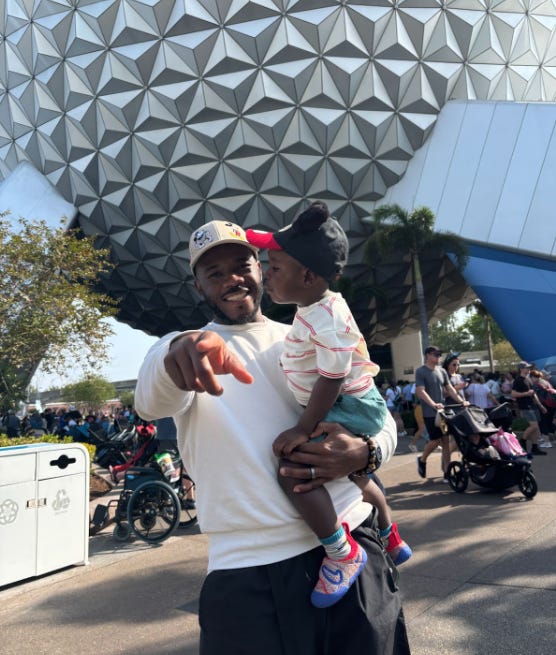
Marc, I couldn’t be more grateful to you. For sharing with us today, for the work you do with Raising Myles and beyond, for showing up vulnerably time and time again.
I hope someday we will get to have a conversation like this IRL with our spouses while our boys play in the background (Rachel Leeke Alexis4 can you and the family join, too?).
Marc’s newsletter is Raising Myles. There you’ll find pieces like:
“A Letter from your Mother” (this one is technically by his incredible wife Maya—it’s a can’t miss for me.).
Marc also recently started a meetup with dad’s in Birmingham at a local library. He shares monthly updates about them here. This is the kind of community we desperately need. Read at your own risk: may cause inspiration, tears and hope.

Questions for you from Marc:
How important is shared identity in the spaces where you seek healing?
I’m curious for men - what messages about masculinity did you inherit, and which ones are you trying to pass down differently?
Is there something you are intentionally doing differently than how you were raised?
Before you comment: As these interviews include vulnerable information, this is a disclaimer that will be at the end of every one of these interviews. A reminder to be thoughtful in any comment you choose to leave. Any abusive comments will be reported and deleted swiftly. This has been quite a friendly space so far, however I don’t think it hurts to be specific about the rules of engagement. Basically, take a breath and edit your comment to reflect something you’d be OK sending to someone you love before hitting enter, please.

Coming up: Next week, a video interview with Lauren W. Westerfield, author of Woman House: Essays and Assemblages; and later, more In Session with Pop Culture pieces on Shrinking (episodes 4 and 5) and a Week in the Life post.
Your input is humbly requested!! If you’ve ever had a question you’ve wanted to ask me or any therapist in general, here is your chance. You can fill out a AMA form here. I’ve separated the form into sections to help in eliciting your curiosity (e.g., What questions do you have about being a therapist? What questions do you have about being IN therapy? What questions do you have about writing? parenting? relationships? The list goes on).
Disclaiming: As we just discussed, therapy can be great. This ain’t therapy. You can find more info and my full disclaimer on my about page here. Abridged version: I’m a therapist, but not your therapist—even if you are a client of mine ~hi, dear one!~ this isn’t a session. I don’t think you could possibly confuse this newsletter with mental health treatment. Alas if that were to happen, let me say definitively, dialoguing is an entertainment and informational newsletter only, not a substitute for mental health treatment. To find a mental health provider, Psychology Today or Zencare can be a place to start. I am an affiliate of Bookshop.org—an organization that supports local independent bookstores. I may earn a small commission if you click through and make a purchase. The thoughts and feelings written here are all my own. You can check out my Bookshop.com storefront here with all the books I’ve mentioned in dialoguing over the years.
Come say hi! Any comments, questions, suggestions, please feel free to email me at dialoguingsubstack@gmail.com—or if you’re reading this via email you can just hit reply and send me a message. Love hearing from you for any and all reasons! If you DM me, please say something more than “Hi.” I always assume those are bots and will not reply.
ICYMI:
February’s round-up: People We Meet on Vacation and Tell Me Lies chat, I open my introverted self up to how I could be a host, expand on the idea of a “container” within therapy and gathering and a downloadable calm place visualization (no one needs that right now, right?)
In Session with “When Harry Met Sally...”
If you enjoy reading dialoguing, there are lots of ways to show that love: click that little “heart,” come hang in the comments, tell a friend (this is the ultimate compliment to me because I know we only send links of the highest caliber to our friends), or upgrade to a paid subscription. Whether it’s your hype, eyeballs or dollars, I’m so grateful for your support of any kind

⭐ Monthly round-ups
say more is a series where I explore what I’m watching, reading, wearing, listening to, eating and moving to and what it made me feel. I also explore some way I’m trying to take care of myself, my family and community using what I know from my work and how it doesn’t always go to plan. These newsletters are a labor of love. They have been described as “epic.” One reader said she “devour[s] them like a giant dessert.”
⭐ Free and discounted workshops
⭐ Exclusive In Session with Pop Culture editions about current TV shows. Right now we are covering, Shrinking
⭐ The entire archive of 120+ pieces and counting
What Are We Even Doing Here If We Aren't Dancing?

I’ve written before about my absolute number one mental health strategy, my catchall: walking. And I love her. She’s a balm for all sorts of maladies. But, there is nothing like what we are exploring today. She’s fun, flirty, and always down to hang. Without a doubt, one of my favorite tools in my toolbox of life is and always will be dancing.
"Let's Talk Therapy" with Aja Frost and Aliza Sir

I feel like a lot of us are coming out from under the hazy false promises of the rom-coms of our youth to realize there is a life force that can only come from our friendships.
It’s a friendaissance, if you will.
⭐ The awareness that you’re keeping a creative’s dream alive for one more day…

This newsletter gets into several different areas of exploration.
With the Let’s Talk Therapy questionnaire I get to ask my favorite Substackers about their relationship to therapy.
In Session with Pop Culture is a series where I watch TV shows and movies or listen to a new album with my therapist hat on.
The monthly round-ups, say more, covers the previous month of what I’m watching, reading, listening to, eating, moving to and learning—and what it made me feel.
If you’d like to receive some of these sections but not others, you can go to your account settings to opt in and out. Personal essays come through the main dialouging page.
Cognitive behavioral therapy (CBT) is a short-term form of psychotherapy based on the idea that the way someone thinks and feels affects the way he or she behaves. CBT aims to help clients resolve present-day challenges like depression or anxiety, relationship problems, anger issues, stress, or other common concerns that negatively affect mental health and quality of life. The goal of treatment is to help clients identify, challenge, and change maladaptive thought patterns in order to change their responses to difficult situations.
That’s right, previous Let’s Talk Therapy interviewee Rachel Leeke Alexis is dear friends with Marc and the godmother to Myles.
 | A guest post by
|