



In therapy, clients will often recount something to me and then wait. Waiting for me to have a set reaction. But often, they haven’t said what this something meant to them, how they experienced it, what they felt. Which leaves me responding, “Say more…”
This is a monthly series where I explore what I engaged with—TV, books, movies, food, movement, people, lessons, clothes—and what they made me feel.
One thing before we jump in, I show up very much as myself here. Myself first, and all my other labels are secondary. If a therapist speaking candidly feels like too much to your system, that is absolutely is OK and this may not be the best particular newsletter for you.

I usually start these by reflecting on the month as whole before jumping into the round-up. I don’t know how to do that first part right now.
Instead, here is what I wrote after finishing with clients for the week. Capturing a moment of feeling fiery, connected, expansive, undeterred and hopeful, followed by a month in review.
There is, of course, space and meaning for both our activism AND art and self-reflection but and these are topics that require a pause, breath and time. Listen to your body about what feels best. As always, feel free to skip this issue if it doesn’t feel right for you.
It’s a {insert word that could possibly encapsulate what this all is} time to be a therapist. I wonder when it will stop feeling like that? Some days it feels like never.
But/And IDGAF. I’m not going to stop doing what I do, holding what I hold, loving the way I love.
Drag as they might.
The relentless drag. Dragging us back in time. Back toward the most concentrated depravity. Toward the disregard for our humanity and connectedness. That’s not where I’m going.
It’s a lot like therapy. Looking back to learn, to heal, to question, to be held accountable, to connect with some ancient and collective wisdom, sure. Looking back to return and revisit the same patterns of harm, no.
I’m staying in the work and what I know in my bones is right/better/just/whole/healing/possible, resting and receiving care so I can get back to embodying that with my whole ass self ✌️ And I know I’m not alone in that.
If you need some guidance in terms of funneling our anxiety and rage into love, support, education, and resistance:
Engage
Leona Waller wrote, “If every American did 3 of these 5 things, ICE would be stopped in its tracks. with very actionable steps
Each state has their current needs regarding ICE’s impact on communities and individuals, which can range from funding to organizing. You can search for your specific community here at The Immigration Advocates Network (shout-out to Tricia Torley for directing me this resource). Through the Solidarity Warriors newsletter, I found a local program that sends Valentine’s to those who have been detained 💌
Educate
If you’re not as versed as you’d like to be on what ICE even is, why it was created, and how it’s being framed as a way to keep “us” (they mean obliging white people) “safe” (it’s weird, that is the last word I’d use to describe how I and everyone I know has been feeling), check out Campaign Zero’s piece below. Using your/our safety as a ploy to “excuse” harm against members of the BIPOC communities is nothing new. It’s been happening and will continue to happen unless we know how to spot it and call attention to it as the dangerous lie that it is.

Regulate
Amber Groomes,Ph.D. (she/her) wrote about how to take care of yourself and the many ways you may be feeling and reacting to what is happening with very tangible tools and self-compassionate reminders (TY, Amber. I needed this).
Samantha Dalton of Nuance Needed wrote about how we need people to be as “well” as they can be right now. No easy feat, but it was the exact phrasing I needed to hear to knock me out of a frozen stupor. Especially as someone with an immense amount of privilege and in my role as a mental health professional, I have a duty here to keep my head above water.


I keep reminding myself, it’s not about boxing in my heart—constraining what it’s allowed to feel—but rather building a big enough space for it all—for anguish, joy and everything in between. I’m just trying to stay tethered to my/our aliveness—even when it hurts, especially when it hurts.
My hope is right now you are continuing to find things that connect you to your core, your awe, your heart, your joy and your power. Your power to, not over—a distinction that seems to be lost on some.
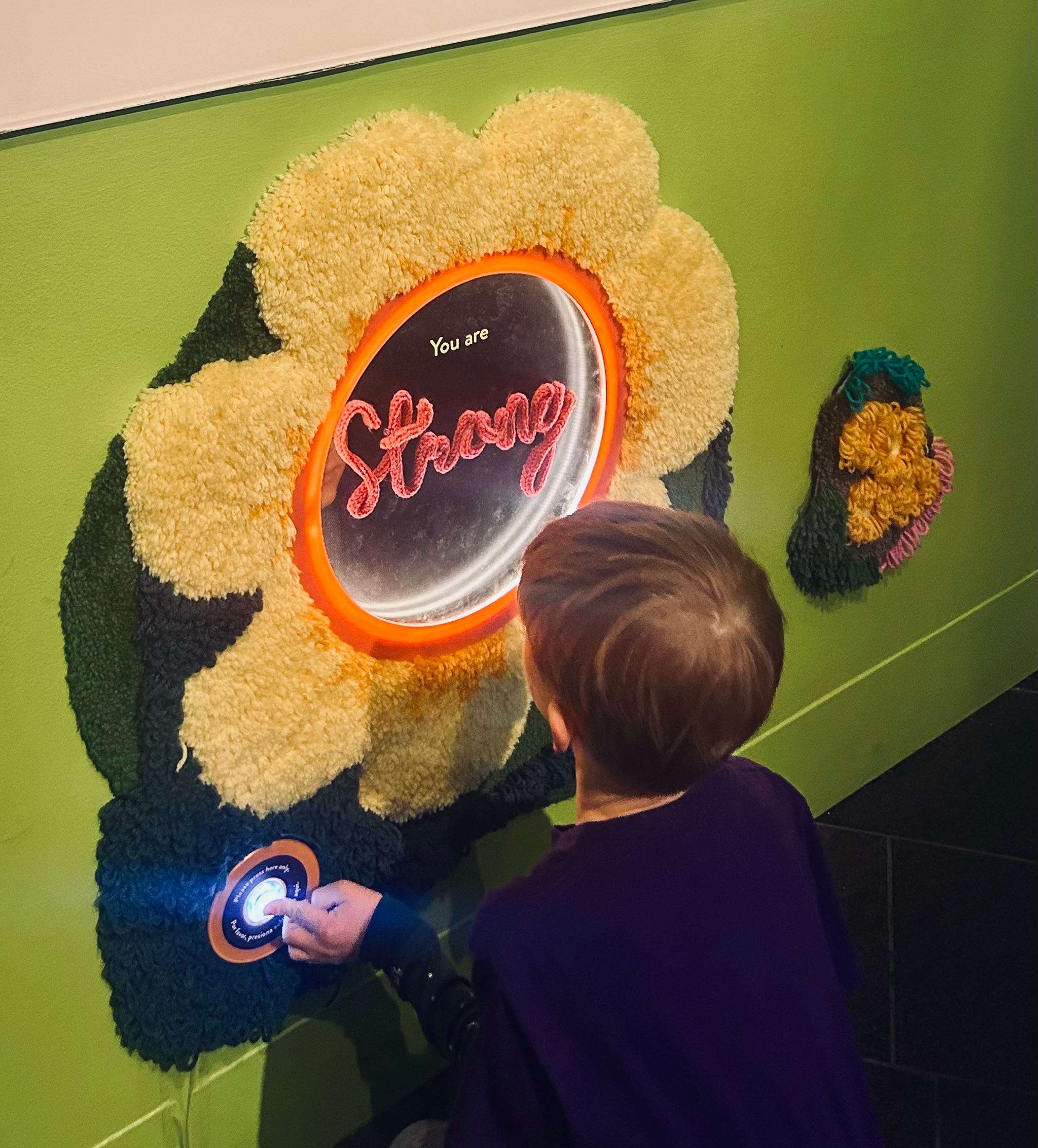
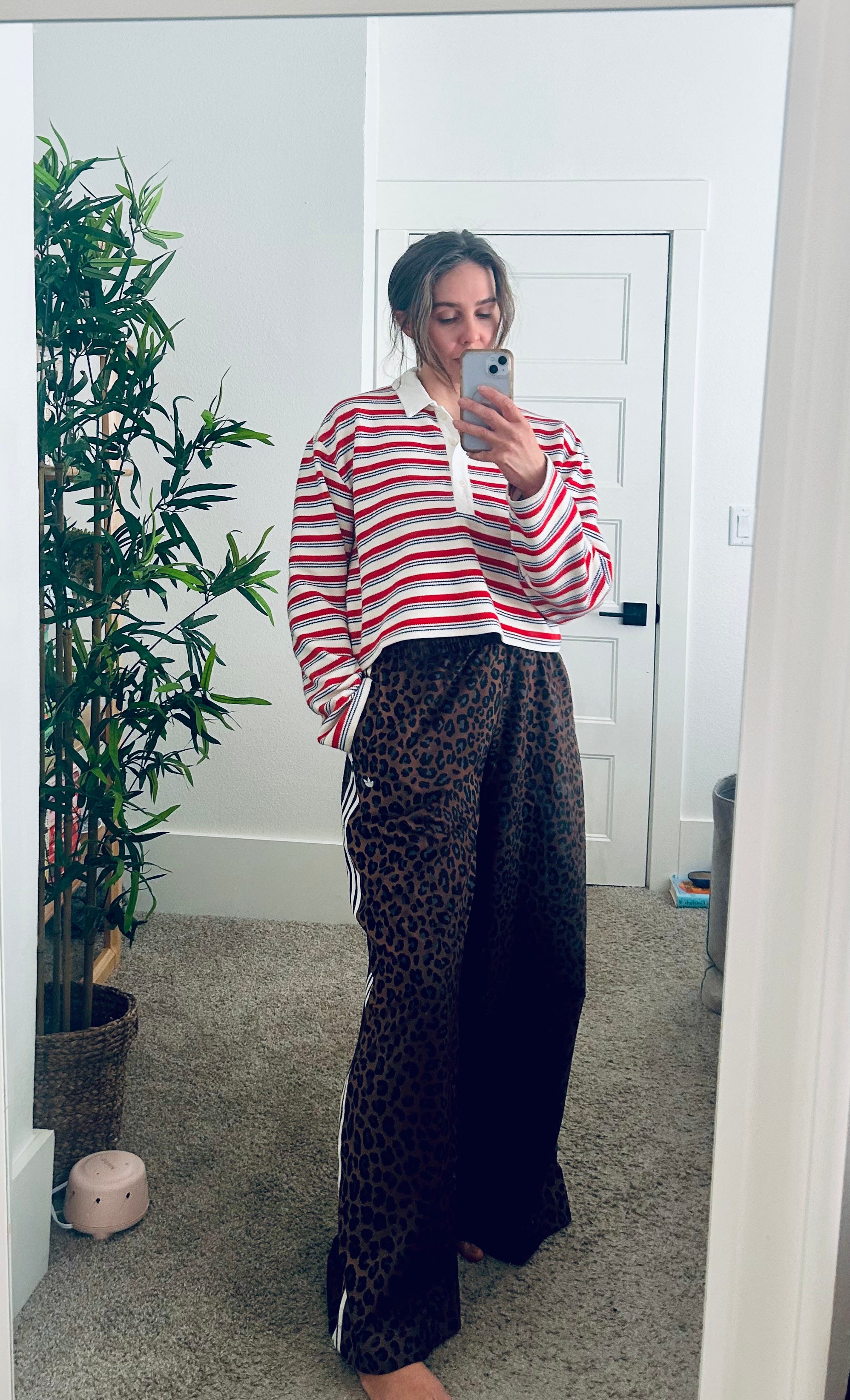
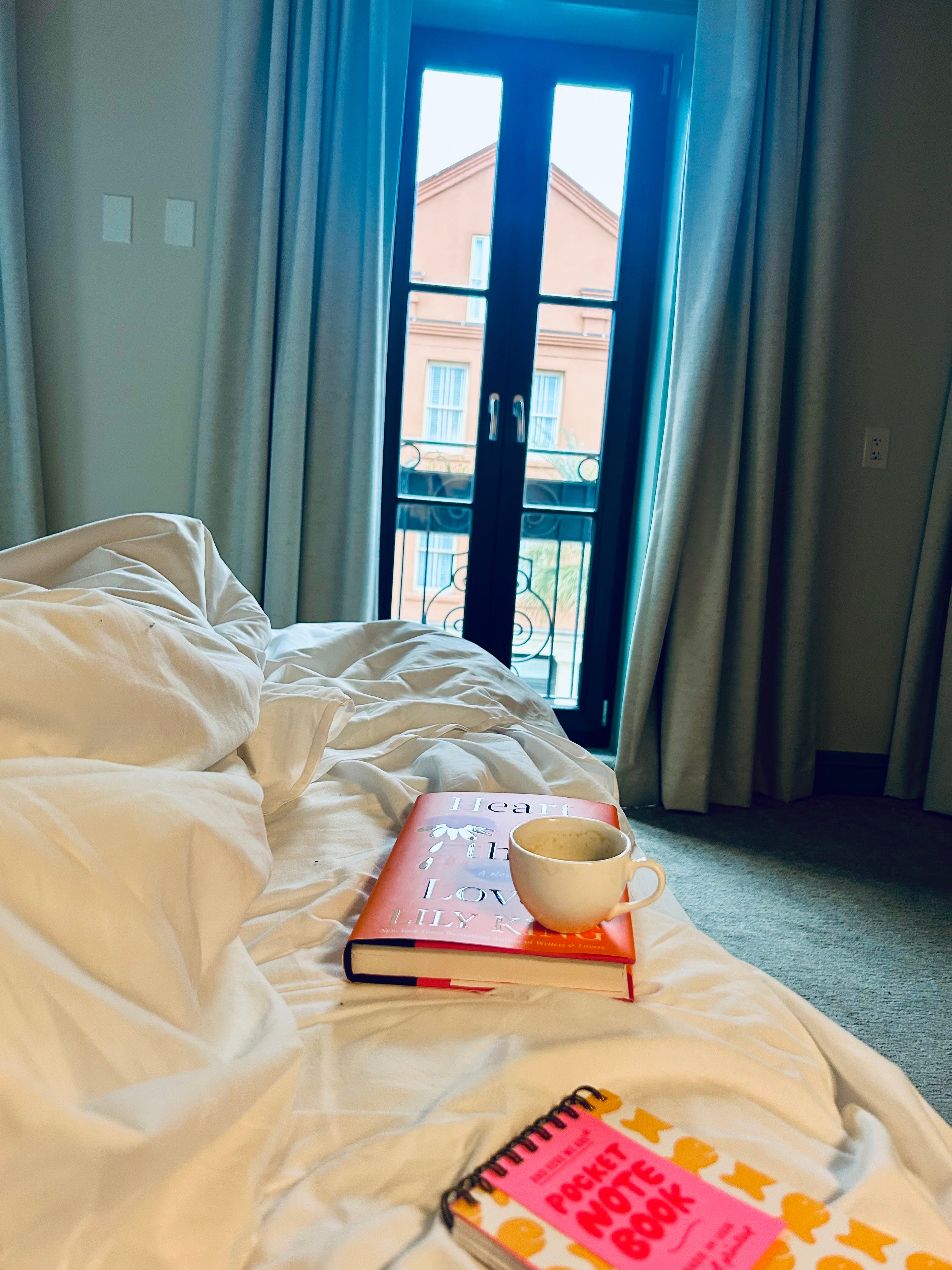
January is always rough for me. I feel like for most of us, yeah? As such, I pre-scheduled a love fest here at dialoguing. I wrote about parenting myself. I asked a bunch of writers the best things they did for themselves last year and the result was a buoying, sacred text. I celebrated one year of my interview series about therapy.
I think it’d be fair to say that loving feeling extended to this month’s round-up, too: a touching interview with an author, everyone’s favorite new show, a restful trip with a bestie, and a pair of shoes I plan to steal from my husband 🤫
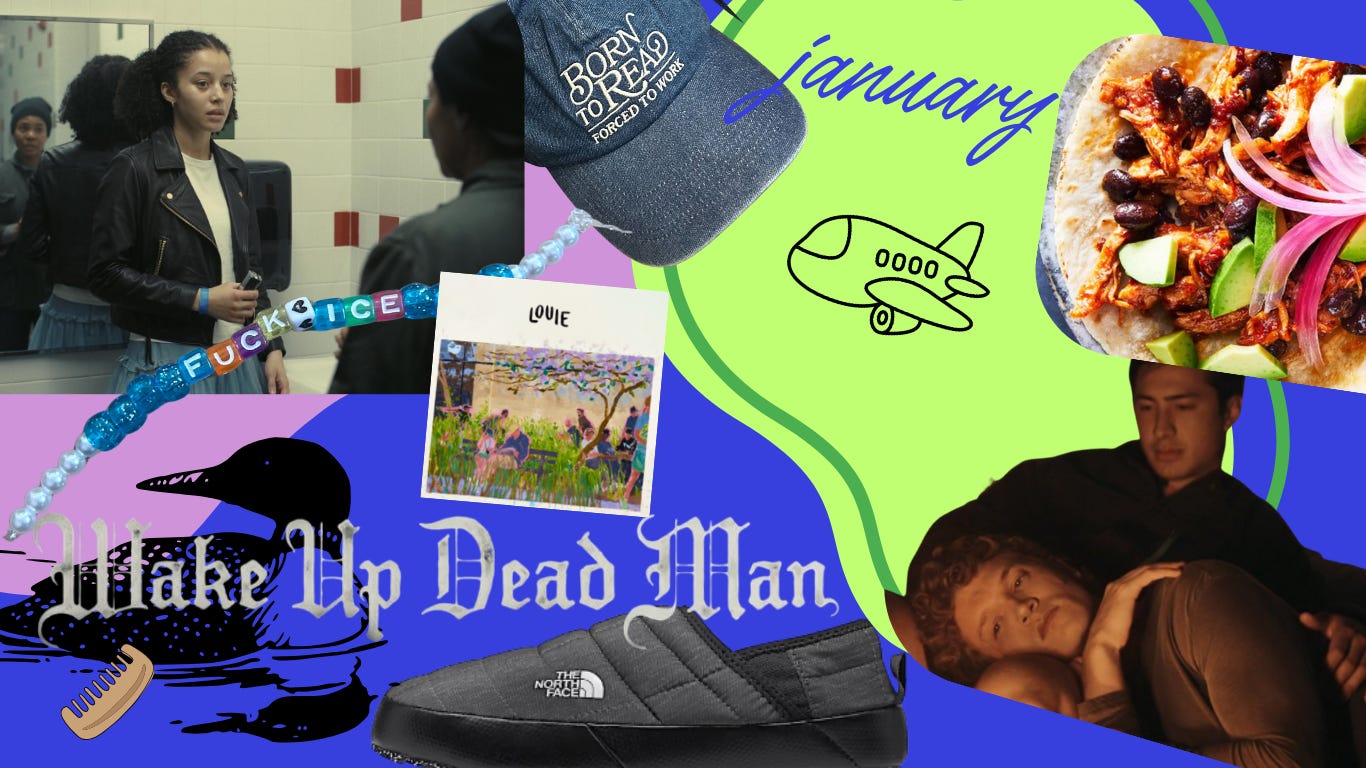

🗞️🗞️🗞️🗞️🗞️
Marc Typo bringing me to tears as usual.

Reading Alex Dobrenko` is always an experience of being whisked away.
This piece makes me think of this conversation I had with my husband last week. Our son was yelling from downstairs while we got ready for work upstairs.
Me: I told myself yelling from other rooms or floors would be something I’d (attempt) to outlaw in my own family.
My husband: Yeah, and what happened? Why’d you fold?
Me: I guess it occurred to me yelling from other rooms is part of what it means to be a family.

Caroline Chambers brought my attention to the next writer via Notes. Is there anything better than when you find a new (to you) writer that speaks to you?

I know a lot of you probably already read this one, but it’s so good.

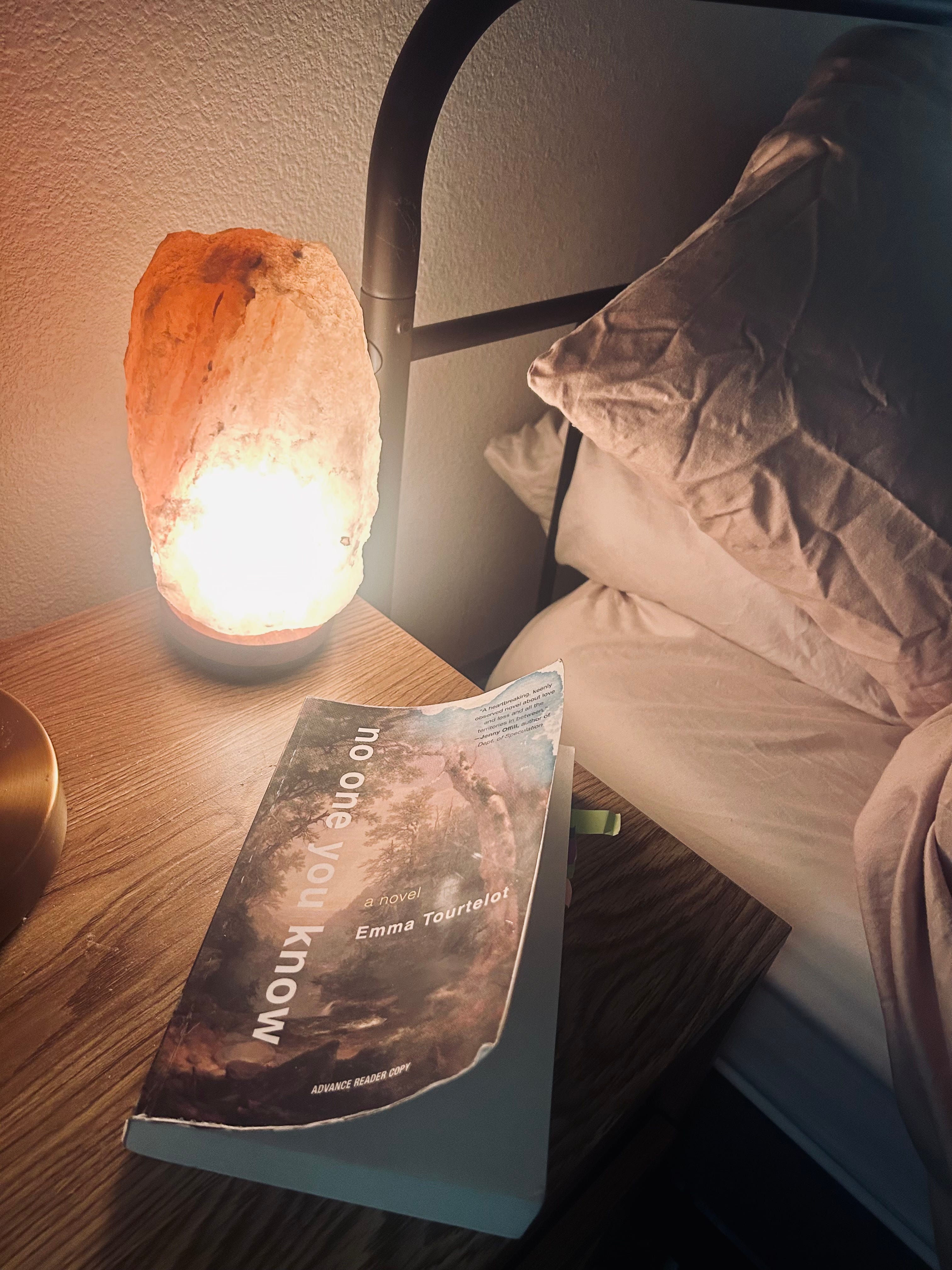
📚 No One You Know by Emma Tourtelot
Do you remember being a teenager?
I do. Intimately. I was, to put it succinctly, an open wound and my relationship with my mother, the tenderest of spots—in all the ways. When Emma reached out about sending me an advance copy of her book, I knew I had to read it.
Told by alternating between teenage daughter, Indie, and her realtor slash momfluencer slash actual mother, Kate, No One You Know allows us to be a fly on the wall as this family grapples with immense loss (on so many levels).
⭐ AN INTERVIEW with the author, Emma Tourtelot


Kaitlyn: Hi Emma! I’m so appreciative you shared your book with me.1 I read it over Thanksgiving and, to my family’s dismay, I couldn’t put it down.
First things first, the therapist in me wants to ask, how are you feeling? Pub day is coming up (tomorrow at the time I’m writing this).
Emma: Weirdly, I feel quite calm. After so many years of writing and editing, and so many months of being my own publicist (that was way harder than writing the thing, by the way), this feels like the fun part: Seeing my book out in the world – in people’s feeds and on a table in my local bookstore. Caroline Cala Donofrio wrote on Substack recently, ”It’s not the size of the venue that matters; it’s the heart of the crowd.” I love this line, and I plan to hold it close in the coming weeks. Already there have been a few reviews with enough heart to fill a stadium for me.
Although, you should probably ask me again how I feel when I get a less than glowing review!
Kaitlyn: Hahaha. I love the self-awareness there. I’m biased, but I feel like we can’t help but feel a bit raw if/when the criticism comes in. It’s so tender to put your work out into the world and then be at the mercy of anyone with a keyboard.
I am glad to hear it’s felt mostly calm. That is the dream place to be putting out art. I loved Caroline’s piece. SUCH a grounded mentality to bring with us into our creative work.
I have some specific themes I want to ask you about, but first, more generally, I’m always curious about the seedling of a book. How did No One You Know come to you?
Emma: My daughter was in middle school when I started writing this book, and her best friend moved away. She was distraught, and so lonely, and there was absolutely nothing I could do. She didn’t want me, she wanted her friend. It was the first time as a parent that I’d just had to watch my kid go through something, and not be able to fix it for her. So I decided to write about the experience – the realization that we can’t always protect the people we love from the world. The world can be cruel, and some people learn that way too young.
Kaitlyn: Ugggh. I can feel that in my bones–both what your daughter felt and the feeling of being the parent when you can’t take the pain away. It’s 360 degrees of heartbreak and powerlessness.
Hearing about the origin of it all makes so much sense, because Kate keeps finding herself in situations where she’s around a feeling so big and it’s not hers to fix, but it feels like she also can’t not try.
It’s like you say in the book:
“But doing nothing, of course, is not an option. This is what it means to be a parent, to oscillate between self-flagellation and hubris–between the belief that nothing you’re doing is right, and the certainty that if you just tried a little harder, you could fix everything. Parenthood wouldn’t be bearable if you didn’t occasionally believe it was in your power to make your child happy.”
I screamed when I read that. Then underlined and put a little sticky note next to it. As a therapist I know intimately that’s not how feelings work. But as a mother, you can’t tell me otherwise, ha!
Emma: The funny thing is that now my daughter is almost eighteen, she tells me this herself. I was trying to comfort her recently by saying something inane to cheer her up, and she was like, “I’m just sad right now, okay? And you can’t fix that. So stop trying to make yourself feel better.” Ouch. She’s very good at coaching me to be the kind of mom she needs!
Kaitlyn: Danggggg. I’m sure that stung and I’m guilty of that too (even though I obviously know better) and I hope it’s also OK to say your daughter is sort of my hero.
Emma: I’ll tell her – she’ll love that!
Kaitlyn: Indie finds herself seeking support online from a guru of sorts. Some of the guidance seems to provide her solace, but some leaves her feeling even more lost and powerless. Can you tell us more about this choice?
Emma: In a very early draft of the book, I had Indie turn to a local church for solace instead. But then I realized that I didn’t want the thing she reached for to be something the adults in her life could so easily understand or dismiss. I wanted it to be her own thing. In the novel, Indie asks, Why is it so hard for parents to believe their kids know something they don’t? And I believe this. I’m guilty of this! So I made sure to give my teenage character something real that was her own. Much of what she learns about consciousness is beautiful, but because of the way she learns it, and who she learns it from, she ends up spinning out.
Kaitlyn: I love that you had Indie call that out. It’s so true! I feel like as parents we sometimes are expected to know everything or we tell ourselves we should, but of course we don’t and can’t and shouldn’t…especially when it comes to our kids telling us about themselves. It occurred to me this is not the only story line where the internet’s sometimes insidious impact is assessed throughout the book, can you tell us more about why this was important for you to explore—almost as its own character?
Emma: That’s such a good question! My first job out of college was with Tripod.com in 1995. I hadn’t even heard of the internet when I applied for the job! It was a magical time and I felt like I was part of something wonderful. (Janelle Brown captures this feeling so well in her novel What Kind of Paradise.) Then I worked for Nerve.com and co-created Nerve Personals (which is how I met my husband!). And then I became a school librarian, which means I now spend my days trying to teach students how to determine whether or not a website is a reliable source. Maybe I’m reaping what I sowed?
Which is a long way of saying: The internet is a complicated beast, and both Kate and Indie experience this. It can nurture community and connection and creativity. We wouldn’t be having this conversation without it! I wouldn’t have found readers for No One You Know without Substack and Bookstagram. And the internet can bring joy, too. So much joy. I mean, that famous one-star review of Pride and Prejudice on Amazon? (“Just a bunch of people going to each other’s houses.”) That review plus door-cam FailArmy videos can get me through a lot of dark days. But also: I see what the internet is doing to teenagers’ mental health and to our collective attention span and to our ability to separate fact from fiction and on and on…
The internet is the air we breathe right now, but parents and teens experience it so differently. I wanted to make sure I included that in my novel.
Kaitlyn: The internet is the poster child for BOTH/AND. I’m so glad we are having this conversation courtesy of the interwebs AND I hate that I spent 20 minutes hate-scrolling today and that my kid wants to watch YouTube more than anything on planet earth.
My last question: What is the thing about this book you want to scream from the rooftops?
Emma: I think something that doesn’t come across when I talk about the book is that it’s funny, too. (At least, I hope so. My husband says it is.) I read the first three chapters at Rough Draft in Kingston, NY, this week, and it was so nice to hear people laugh. The book is about grief and loss and a family struggling to connect, but it’s also about the ways we crack each other up. It’s BOTH/AND, as you say. I had this moment during the reading where I heard someone in the front row laugh super hard, and then I glanced down at the next paragraph I was about to read and realized how heavy it was. I almost felt like I should apologize first. But life is never just one thing.
Kaitlyn: It really, really isn’t. And neither are we. (Also I can attest. The book is very, very funny—you can get it here).
Also read:
I didn’t finish any books in January (sad, sad), but I am working my way through Intermezzo. I know there are so many Sally Rooney lovers out there and I don’t dislike it, in fact there is a lot I’m getting swept away in, but I’d be lying if I didn’t admit I’m struggling a bit. Also, bought Heart of the Lover while on a trip. Hoping that will be a part of next month’s round-up.
|| You can find my Bookshop.com storefront here with all the books I’ve mentioned in dialoguing over the years. ||
What lies ahead:
❤️🔥🏒 A mini In Session with Pop Culture on how Heated Rivalry shows us an incredible depiction of authenticity and vulnerability in tense moments (and how it’s the simple things we need most).
🦴🚪 I have a bone to pick with Sliding Doors
🌴✈️ How I spent 48 hours in Charleston
